07/04 TIA Symposium 心得分享

Guardians of Liberty: Taiwan's National Security and Human Rights in the Crosshairs of Global Geopolitics
TIA Fellow Archer Chao-Hang CHIU, 07/04/2025
———
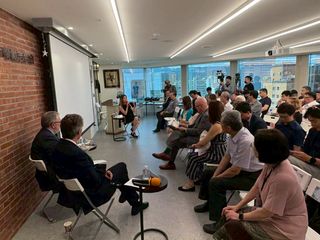
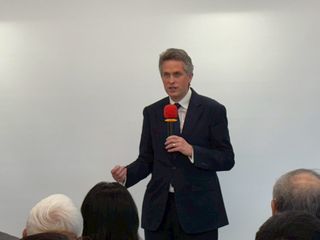
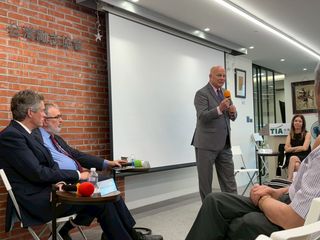
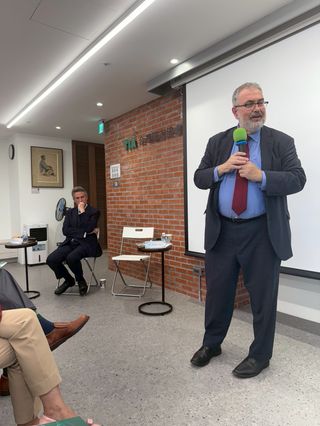
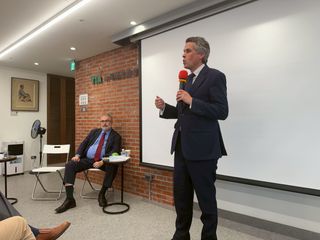
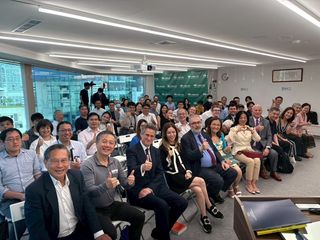
In an era where the tectonic plates of global order are grinding against one another with renewed ferocity, Taiwan has become the crucible where democratic resolve and totalitarian ambition collide. At a recent international symposium convened by Taiwan Inspiration Association, two eminent voices—British MP Sir Gavin Williamson, former UK Secretary of State for Defence, and Dr. Piero A. Tozzi of the U.S. Congressional-Executive Commission on China—offered an incisive examination of Taiwan’s national security and human rights challenges. Their exhortations echoed with the gravitas of historical precedent and the exigency of contemporary peril. Taiwan’s fate, they argued, is not merely a regional question but a litmus test for the world’s commitment to liberty.
———
Sir Gavin Williamson commenced by deconstructing a long-held Western fallacy—the beguiling notion that Chinese Communist Party officials are animated by the same reciprocal ethics and conciliatory logic as their Western counterparts. In truth, where the West extends an olive branch, Beijing perceives vulnerability; where Western diplomats seek concord, Beijing exploits conciliation as an aperture for strategic gain. This moral asymmetry, he suggested, has at least in part emboldened Beijing's predations. If the West persists in projecting its own values onto the CCP, it will remain trapped in a Sisyphean delusion, perpetually mistaking predation for partnership.
———
Further, Williamson delineated Beijing's overarching ambition: the erosion of the rules-based international order and its substitution with a Sinocentric hegemony crafted in the CCP’s image. Yet he offered a counternarrative of resilience. When democracies such as, inter alia, the United States, the United Kingdom, France, Australia, and Japan coalesce with audacity and clarity of purpose, the gravitational pull of liberty acts as a bulwark against Beijing’s revisionism. Unity among democracies is no longer an aspirational ideal but an indispensable strategic imperative in the face of authoritarian, or in the other speaker Dr. Tozzi’s word totalitarian, encroachment.
———
Turning his gaze to Taiwan, Williamson lamented the island’s habitual diffidence on the global stage. Despite its prodigious contributions to global technology, economics, healthcare, and democratic governance, Taiwan often eschews leveraging its soft power for geopolitical advantage. In contrast, the CCP unabashedly weaponizes economic statecraft and coercive diplomacy to isolate Taiwan and exact political concessions. Williamson’s counsel was unequivocal: Taiwan must abandon its undue modesty, shed the diplomatic reticence of the past, and assert its rightful place in the international community with unapologetic confidence.
———
Finally, Williamson underscored the pernicious power of language. Euphemisms such as "unification" sanitize what is, in reality, an act of aggression. The West’s linguistic complacency obfuscates the true nature of Beijing’s designs—hostility cloaked in benign terminology. If the international community continues to capitulate to such rhetorical distortions, it risks anesthetizing itself to the looming peril. Vigilance in language, he argued, is vigilance in thought—and ultimately, in action.
———
Dr. Piero A. Tozzi, in turn, framed Taiwan’s security dilemma as a moral choice. While peace is the universal aspiration of the Taiwanese people, the critical question remains: what kind of peace will they pursue? A peace secured through credible deterrence, or a precarious peace contingent upon Beijing’s mercurial benevolence? The latter, he warned, is not peace at all but a simulacrum, fragile and ephemeral, resting upon the caprice of an autocracy whose interests are inimical to Taiwan’s autonomy.
———
Tozzi further posited that Taiwan’s most potent defense does not reside in its arsenals but in its moral legitimacy. Its democratic institutions, constitutional governance, and reverence for human rights constitute a narrative fortress far stronger than any missile system. This moral high ground contrasts sharply with the CCP's totalitarian modus operandi, offering a beacon of hope not only to the Taiwanese but also to all who languish under Beijing’s oppressive yoke. In a world starved for principled leadership, Taiwan’s democratic vibrancy is its greatest shield.
———
In a particularly nuanced reflection, Tozzi emphasized that Taiwan's cultural and ethnic proximity to China does not diminish its political distinctiveness. Rather, Taiwan exemplifies that Han Chinese heritage and Western democratic values are not mutually exclusive. This synthesis rebukes Beijing’s narrative monopoly over Chinese identity. By confidently embodying both traditions, Taiwan can inspire mainland Chinese citizens to envision a future where cultural pride and political freedom coexist harmoniously, rather than being forcibly bifurcated.
———
Lastly, Tozzi illuminated the CCP’s insidious conflation of legitimate criticism with racial animus. Whenever Western governments decry the CCP’s espionage, human rights abuses, or disinformation campaigns, Beijing reflexively weaponizes accusations of racism to stifle scrutiny. To counter this cynical tactic, it is imperative that freedom-loving voices from within the Chinese-speaking world—Chinese, Taiwanese, Hongkongers, Uyghurs, Tibetans and others—speak candidly about their lived realities. Their testimonies pierce the veil of propaganda far more effectively than any Western critique, exposing the CCP's abuses as systemic, not cultural.
最新文章
其他活動心得分享